


PROGRESSIVE CAVITY PUMP SPARE PARTS
FLUXMEISTER PROGRESSIVE CAVITY PUMP
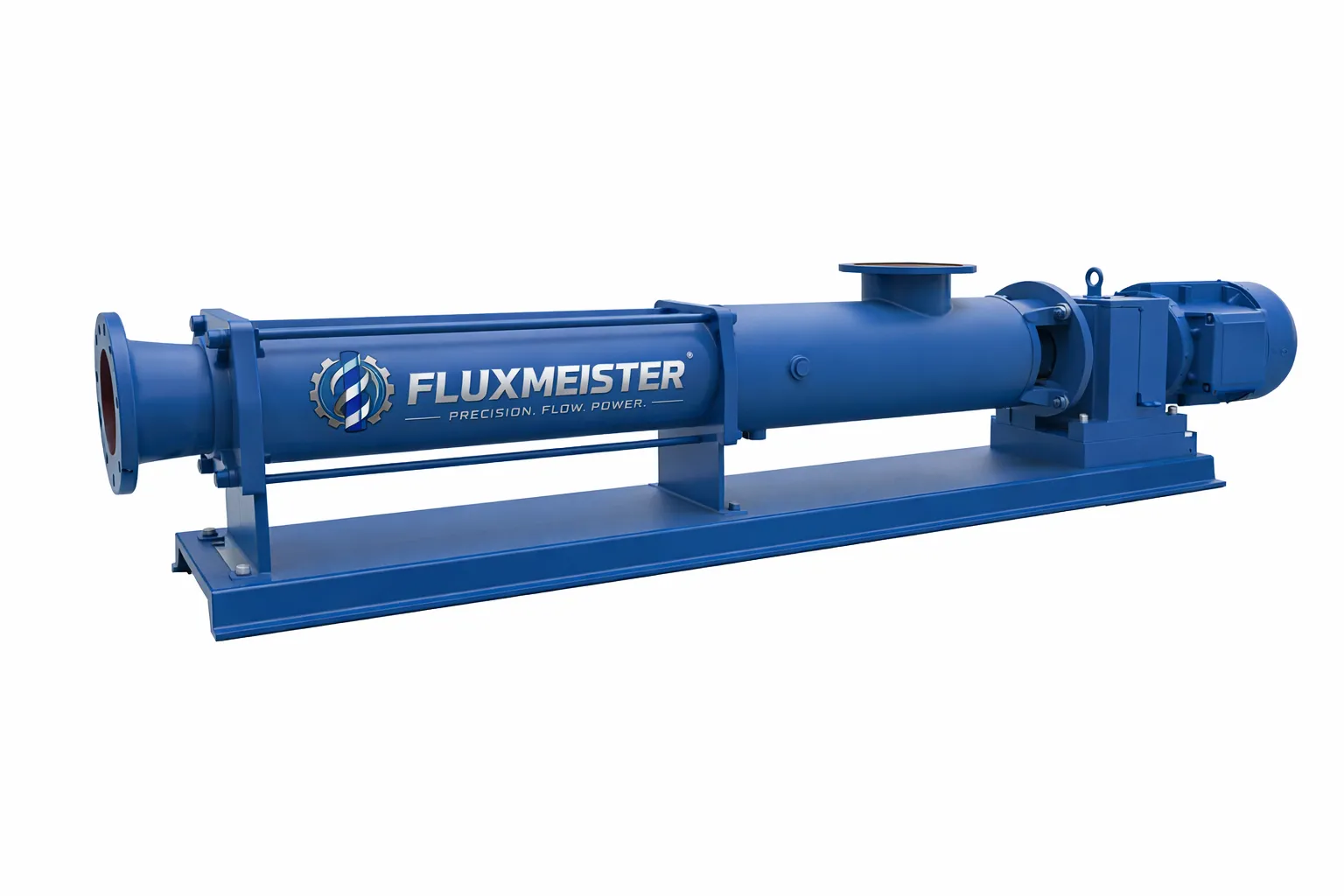
Description
1. What are Progressive cavity pumps?
Fluxmeister Progressive cavity pumps are positive displacement pumps that move fluid through a series of small, stationary gaps created by a helical rotor rotating within a double helix stator. These pumps are highly efficient for viscous, abrasive, or shear-sensitive fluids.
Key Features:
✔ Smooth, vibration-free flow
✔ Handles high-viscosity fluids
✔ Self-priming capability
✔ Works with abrasive and solid-laden media
✔ Precise metering capabilities
2. How Do Monopumps Work?
The rotor (single-threaded metal screw) rotates eccentrically within the stator (elastomer-coated double helix).
As the rotor rotates, the closed gaps move fluid forward from the suction side to the discharge side.
The flow rate is proportional to the speed, making it ideal for dosing applications.
3. Main Components of Monopumps
Rotor
Helical screw rotating inside the stator
Stainless steel, hardened steel, coated alloys
Stator
Elastic sleeve with double helical gap
NBR, EPDM, Viton®, Hytrel®, food-grade rubber
Universal Joint
Transmits torque while allowing eccentric movement
Steel, tungsten carbide coated
Drive Shaft
Connects the motor to the rotor
Stainless steel, carbon steel
Mechanical Seal
Prevents leakage
Silicon carbide, tungsten carbide
Housing/Case
Contains the pumping mechanism
Cast iron, stainless steel, engineering plastics
4. Advantages of Monopumps
✅ Handles thick and viscous liquids (e.g., slurry, syrup, adhesives)
✅ Low shear force – precise Ideal for liquids (e.g., food, cosmetics)
✅ Works with high solids content (e.g., wastewater, mining slurries)
✅ Precise flow control (used in measurement applications)
✅ Self-priming and reversible flow
5. Common Applications
Wastewater Treatment (sludge, sand, sewage)
Oil and Gas (crude oil, drilling mud, multiphase liquids)
Food and Beverage (chocolate, yogurt, dough, sauces)
Chemical Processing (polymers, resins, solvents)
Mining and Minerals (wastes, abrasive slurries)
Pulp and Paper (fiber suspensions, coatings)
6. Maintenance and Troubleshooting
Common Problems and Solutions:
Rotor/stator wear → Replace elastomer stator or coated rotor
Loss of suction → Check for leaks or blockages in the suction line Get
Excessive vibration → Inspect universal joints and alignment
Reduced flow rate → Check for stator swelling or rotor wear
Preventive Maintenance Tips:
✔ Regularly check rotor and stator wear
✔ Use elastomers compatible with the pumped medium
✔ Monitor seal and bearing condition
✔ Avoid dry running (can damage the stator)
7. Selecting the Right Monopump
When selecting a monopump, consider:
Fluid viscosity and abrasiveness
Required flow rate and pressure
Material compatibility (stator elastomer, rotor coating)